Last updated: April 2026 | Independent review, not sponsored
The Woodway Curve is one of the most talked-about curved treadmills in UK fitness circles – and on its published design it looks set to live up to the hype in some areas while falling short in others. This Woodway Curve review is based on Woodway’s specifications and UK retailer listings, and gives you the pros, the cons, and a straight answer on whether the eye-watering price tag is justified for UK buyers.
Quick Verdict
| Overall Score | 8.4 / 10 |
| Best For | Serious athletes, PT studios, high-performance gyms |
| Avoid If | You’re on a tight budget or need a home-friendly footprint |
| Price | Around £9,300 inc. VAT at UK retailers (prices vary) |
| Free Trial | Ask authorised dealers about demo sessions |
What Is Woodway Curve?
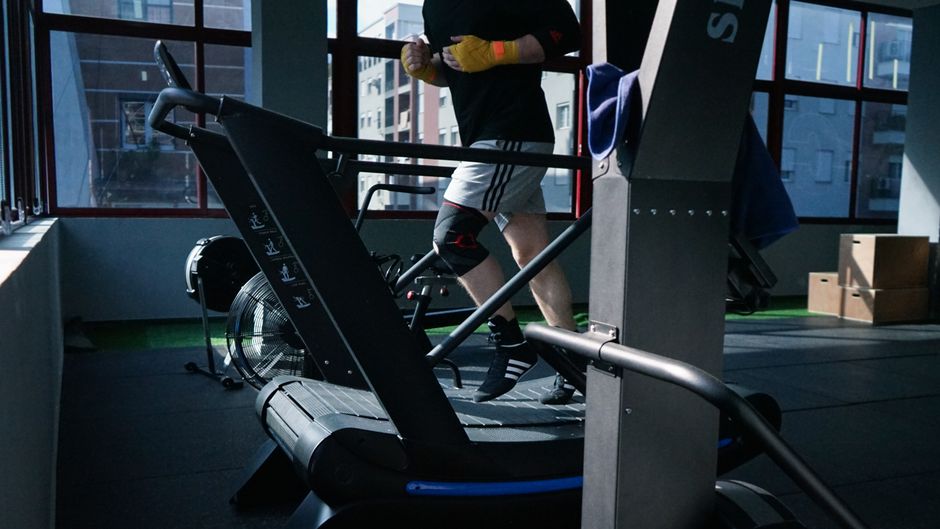
The Woodway Curve is a self-powered, non-motorised curved treadmill manufactured by Woodway, an American company with a long-standing reputation in professional and elite sports conditioning. Unlike conventional motorised treadmills, the Curve relies entirely on your own effort – you push the belt with each stride, meaning the machine only moves as fast as you do. The distinctive concave running surface is designed to mimic the biomechanics of outdoor running, encouraging a more natural midfoot strike and activating the posterior chain more effectively than a flat-belt alternative.
First gaining popularity in elite sports facilities, the Woodway Curve has gradually made its way into premium UK commercial gyms, CrossFit boxes, and private training studios. The machine has no motor, no power cable requirement for the belt, and an impressively minimal maintenance overhead – factors that make it attractive for facility managers. Woodway positions it as a premium, commercial-grade machine.
Key Features
Self-Powered Curved Belt System
The defining feature of the Woodway Curve is its patented curved, self-powered belt. Because you drive the belt yourself, you naturally decelerate when you ease off – giving you instant, organic speed control. This engages your hamstrings, glutes, and calves significantly more than a motorised equivalent, making each session measurably more demanding. That self-powered action is why it is popular for sprint intervals.
Woodway’s Slat Belt Technology
Rather than a traditional continuous rubber belt, the Woodway Curve uses individual rubber slats mounted on a series of rolling bearings. This dramatically reduces impact forces on the joints – Woodway positions the slat belt as reducing impact compared with conventional treadmill surfaces. That is why it is often considered for runners returning from injury, though anyone with a medical condition should get professional advice first.
Integrated Performance Console
The Curve’s console displays real-time data including speed, calories, distance, and heart rate (via a chest strap, sold separately). It is straightforward rather than flashy – there’s no touchscreen, no streaming apps, and no built-in training programmes. For data-driven athletes who prefer simplicity on the display and complexity in their effort, this is entirely adequate. Those expecting a Peloton-style experience will be disappointed.
Robust Commercial-Grade Build
The Woodway Curve is built to an exceptionally high commercial standard. Woodway builds the Curve as a commercial machine with no drive motor, which is why it is positioned as a lower-maintenance option than a motorised treadmill.
How Woodway Curve Compares
| Feature | Woodway Curve | Assault AirRunner | TrueForm Runner |
|---|---|---|---|
| Self-Powered Belt | ✅ | ✅ | ✅ |
| Commercial Build Quality | ✅ | ✅ | ✅ |
| Integrated Touchscreen | ❌ | ❌ | ❌ |
| Home-Friendly Price Point | ❌ | ✅ | ❌ |
Pros and Cons
✅ Pros
- Exceptionally low joint impact thanks to the slat belt system
- Encourages natural running gait and midfoot striking
- No motor means virtually no electricity running cost
- Built for commercial use, with a design aimed at durability (check Woodway’s warranty terms)
- The curved, self-powered belt changes how you run compared with a motorised treadmill
- Instant speed response – perfect for HIIT and sprint work
- Low long-term maintenance costs compared with motorised alternatives
❌ Cons
- Purchase price is prohibitively expensive for most home buyers
- No motorised incline or decline settings
- Console is basic – no app integration, no streaming, no built-in programmes
- Self-powered curved belt takes some getting used to compared with a motorised treadmill
- Heavy and difficult to move once positioned
Pricing
The Woodway Curve sits firmly at the premium end of the treadmill market. At the time of writing, UK retailers list the standard Curve at around £9,300 inc. VAT (roughly £7,750 ex. VAT), with the larger Curve XL listed higher and commercial fleet pricing varying again. It is worth contacting Woodway or an authorised UK distributor directly for an accurate current quote, as commercial pricing can vary depending on volume and specification.
For context, the Woodway Curve is not typically positioned as a home gym product – it’s an investment for commercial gyms, CrossFit facilities, sports academies, and private PT studios where the cost-per-use calculation over a five-to-ten year lifespan becomes genuinely competitive.
- Woodway Curve (Standard): Around £9,300 inc. VAT at UK retailers (check current price)
- Woodway Curve XL: Larger model, listed higher than the standard Curve – check with UK retailers
- Demo / Trial: Ask authorised UK dealers whether a demo is available before purchasing
- Finance: Commercial finance options may be available through approved distributors
Who Is Woodway Curve Best For?
Perfect For:
- Commercial gym operators wanting a premium, low-maintenance running machine that justifies a higher membership tier
- Personal trainers and PT studio owners looking for a performance tool that differentiates their offering from high-street gyms
- Elite and semi-professional athletes who need sprint training that genuinely replicates outdoor running biomechanics
- Physiotherapy and rehabilitation clinics where reduced joint impact is a clinical priority, not just a marketing claim
- CrossFit and functional fitness facilities where the self-powered belt excels in high-intensity, interval-based programming
Not Ideal For:
- Home gym buyers on any budget below £10,000 – there are simply more practical ways to spend that money for personal use
- Beginners or casual walkers who won’t exploit the machine’s performance capabilities and may find the curved belt disorientating
- Anyone wanting digital features – streaming classes, app-connected training plans, or touchscreen interactivity are entirely absent
- Small studios with limited floor space – the Curve has a substantial footprint and is not easily repositioned
Our Verdict
The Woodway Curve is a premium, non-motorised curved treadmill built for commercial use. Its slat belt system is designed for lower joint impact, the self-powered curved surface gives a different running experience from a motorised treadmill, and Woodway markets it as a durable commercial-grade machine. For commercial operators, elite athletes, and performance-focused studios, the investment is entirely justifiable.
However, the Woodway Curve is not without its limitations. The complete absence of digital features feels increasingly dated in a market where connected fitness is the norm, the price is inaccessible for the vast majority of individual buyers, and the self-powered belt takes some getting used to. If your budget or use case doesn’t align with commercial deployment, there are worthy alternatives worth exploring first.
| Category | Score / 10 |
|---|---|
| Value for Money | 7.0 |
| Features | 7.5 |
| Ease of Use | 8.0 |
| UK Availability | 8.5 |
| Overall | 8.4 |
View Woodway Curve on Woodway →
Frequently Asked Questions
Is the Woodway Curve worth the money?
For commercial gyms, PT studios, and elite sports facilities, yes – the Woodway Curve may justify its price through its commercial-grade build, low maintenance needs and a different running experience from motorised alternatives. For individual home buyers, the cost is very difficult to justify unless budget is no object at all.
What is the difference between the Woodway Curve and a normal treadmill?
The Woodway Curve is self-powered – you move the belt with your own effort rather than a motor propelling it beneath you. The curved running surface encourages natural biomechanics, greater posterior chain activation, and a higher calorie burn per session. It also uses a slat belt system rather than a continuous rubber belt, which Woodway positions as reducing impact on the joints.
How many calories does the Woodway Curve burn compared to a regular treadmill?
Many people find non-motorised curved treadmills more demanding than motorised ones at the same speed, and Woodway does not publish a guaranteed calorie figure for the Curve. The main reason is that the user must generate all of the belt’s momentum themselves, recruiting more muscle mass – particularly through the glutes, hamstrings, and calves – with every single stride.
Can you use the Woodway Curve for walking?
Yes, the Woodway Curve can be used for walking, though its design is optimised for running and sprinting. Walking on a curved, self-powered surface differs from a flat treadmill, so allow some time to adjust. For pure walking applications – particularly in rehabilitation settings – the low-impact slat belt may make it a useful option.
Does the Woodway Curve require electricity?
The Woodway Curve requires a small amount of electricity to power the console and display, but its belt is entirely self-powered and requires no electrical motor. This makes it far more energy-efficient than motorised treadmills, eliminates the most common cause of treadmill breakdown, and means ongoing running costs are negligible compared with conventional machines.
Still Not Sure? Compare Your Options:
- Wattbike Atom Review: 7 Things Nobody Tells You About This Indoor Bike
- Kettlebell Kings Review: 5 Surprising Pros – and the Cons Nobody Mentions
- Why the Amazfit GTR 4 Beats Fitbit for Budget Runners Who Take Training Seriously
- True Form Runner vs Woodway – how the Woodway Curve compares with the TrueForm Runner
- Arc Trainer review – another low-impact cardio machine to compare