Independent UK guide based on published product information and published research. We have not lab-tested any product. This page contains affiliate links.
Creatine is one of the most researched supplements in sports nutrition.
Related: Vitamin D2 vs D3: Which Should UK Buyers Choose? — the same price-per-dose approach applied to vitamin D forms
The International Society of Sports Nutrition position stand on creatine describes creatine monohydrate as “the most effective ergogenic nutritional supplement currently available to athletes” for high-intensity exercise, and reports that supplementation is safe and well tolerated in healthy individuals.
So the practical question for most UK buyers is which tub to buy. Search online and you’ll find dozens of options at different prices. Many are plain creatine monohydrate, so what matters is purity, price per gram and whether the seller is transparent about what is in the tub.
Quick Verdict
| Option | Best for | What to check |
|---|---|---|
| Plain creatine monohydrate (for example Bulk Creatine Monohydrate Powder) | Most buyers: it is the form the research is based on | Bulk lists it as 99.9% pure, with a 5g serving; check current price per gram |
| Creapure-labelled creatine monohydrate | Buyers who want a named ingredient source | Usually costs more; the label does not change what creatine does |
| Other forms (HCl, ethyl ester and similar) | Nobody in particular | The ISSN position stand calls claims that other forms are absorbed better “currently unfounded” |
Table of Contents
- What Is Creatine Monohydrate?
- What to Look For When Buying
- Comparison Table
- Pros and Cons
- UK Pricing Guide
- Who Should Buy Creatine?
- Our Verdict
- FAQ
What Is Creatine Monohydrate?
Your body already makes creatine. It stores it in your muscles and uses it during short, intense efforts such as heavy lifting, sprinting and HIIT.
Supplementing raises the amount stored in muscle. The research behind it is about performance in short, high-intensity exercise, and gains build up over weeks of consistent training and supplementation.
Creatine monohydrate is the original form and the most studied. Other versions exist, like HCl or ethyl ester, but the ISSN position stand says claims that other forms are absorbed better or degrade less are currently unfounded. Stick with monohydrate unless you have a specific reason not to.
For more on building a sensible supplement stack, see our UK supplement reviews.
What to Look For When Buying
This guide is based on published product information and published research. We have not tested or lab-tested any of the products mentioned. Five things matter when comparing tubs:
- Purity – is it plain creatine monohydrate or padded with fillers?
- Value – actual cost per gram of creatine, not just the headline price
- Transparency – does the seller state the ingredients, serving size and any test or Creapure certification?
- UK availability – can you order it easily and get it within a few days?
- Flavour – unflavoured is the simplest; flavoured versions are a personal preference
Comparison Table
| Feature | Bulk Creatine Monohydrate Powder (per Bulk) | Creapure-labelled products |
|---|---|---|
| Form | Creatine monohydrate, listed as 99.9% pure | Creatine monohydrate carrying the Creapure label |
| Serving | 2 scoops, about 5g (4.4g pure creatine) | Varies by brand; check the label |
| Flavours | Unflavoured plus several flavours | Varies by brand |
| Suitable for vegans and vegetarians | Yes, per Bulk | Check the label |
| Price | Check the current price on the Bulk site | Usually higher; compare price per gram |
Check Bulk Creatine Monohydrate Price →
Pros and Cons
✅ Pros
- One of the most researched supplements in sports nutrition
- The ISSN position stand reports it is safe and well tolerated in healthy individuals
- Low cost per serving compared with most supplements
- Simple to use: a few grams a day mixed into a drink
- Works across most strength and high-intensity training styles
❌ Cons
- Weight gain is the only side effect consistently reported in the research (the ISSN position stand), which is mostly extra water in muscle
- Response varies between people
- Budget brands may not publish independent test results
- People with kidney problems should speak to a GP first
UK Pricing Guide
Creatine monohydrate is usually cheap per serving compared with most supplements. At 5g a day, a 500g tub gives 100 servings, and a 1kg tub gives 200. Prices change often and vary by brand, pack size and promotion, so compare the price per gram (price divided by grams) rather than the headline price.
Check Bulk Creatine Monohydrate Price →
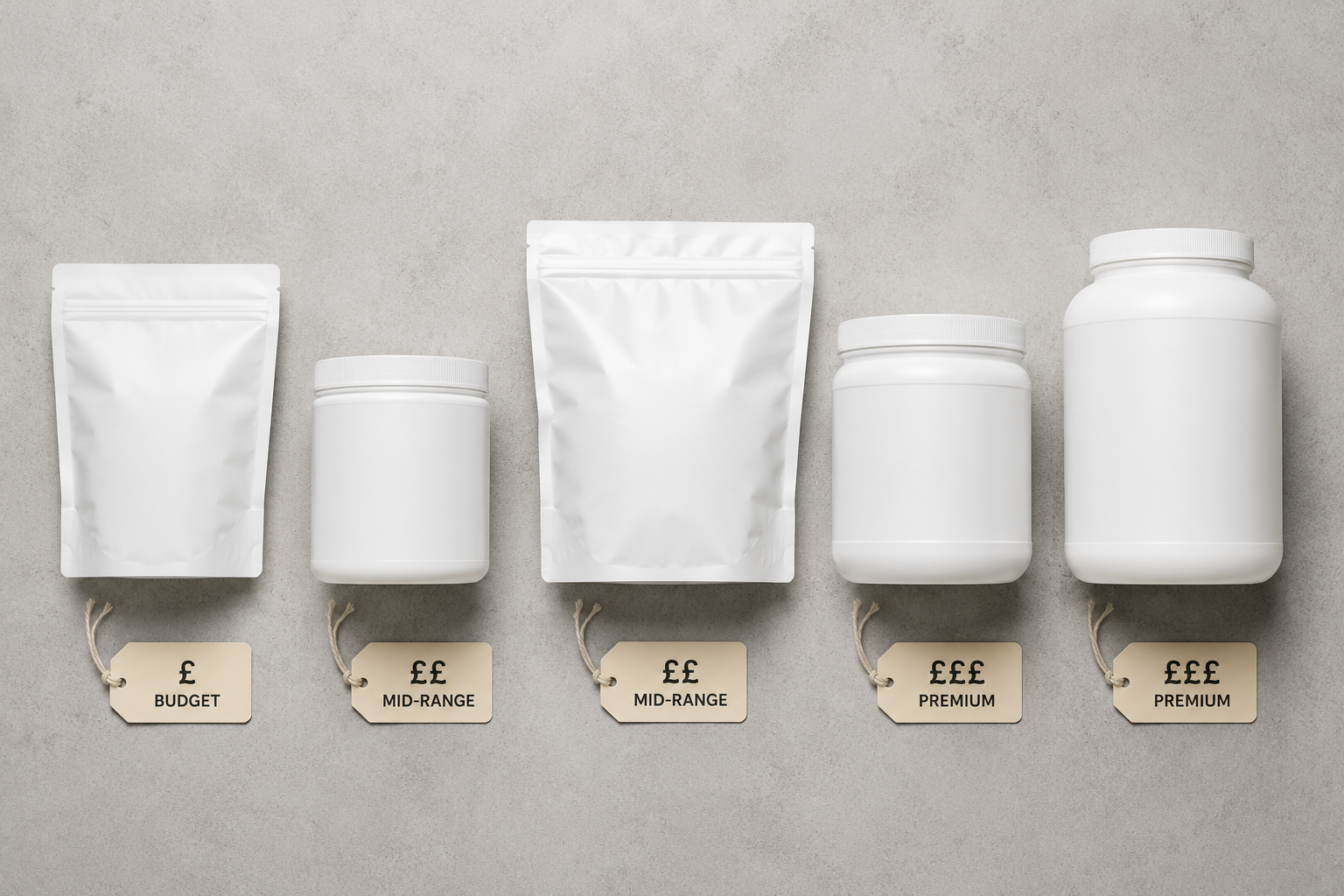
As a rough guide, a Creapure-labelled tub tends to cost more than a plain one. The extra cost buys a named ingredient source, not a different result.
Who Should Buy Creatine Monohydrate?
Good fit if you:
- Do strength training or HIIT regularly
- Want a well-researched first supplement to consider
- Play power sports like rugby, sprinting, or CrossFit
- Are vegetarian or vegan (you may get less creatine from food)
Not the right fit if you:
- Only do steady-state cardio – the research is on short, high-intensity efforts
- Have existing kidney problems – speak to your GP before starting
- Are pregnant or breastfeeding – speak to your GP or midwife first
- Are under 18 – speak to a GP before taking any sports supplement
Our Verdict
For most healthy adults who train hard, plain creatine monohydrate is the form to look at. Compare the price per gram, check the label for purity and serving size, and take a few grams a day consistently. This page does not rank brands, because we have not tested them. Creatine will not replace good training, sleep and food.
Check Bulk Creatine Monohydrate Price →
Creatine is not suitable for everyone. If you have a medical condition or take medication, check with your GP first.
Related: Puresport – what the brand lists, including creatine and Informed Sport certification
Frequently Asked Questions
What is the best creatine monohydrate in the UK?
There is no single best tub. Plain creatine monohydrate is the form the research supports, so compare price per gram, the purity stated on the label and whether the seller is transparent about ingredients. Bulk Creatine Monohydrate Powder is one example, listed by Bulk as 99.9% pure with a 5g serving. Creapure-labelled products cost more and are a choice about ingredient source.
Should I do a loading phase with creatine?
You don’t have to. The ISSN position stand describes a loading approach of about 0.3g per kg of body weight a day for 5 to 7 days, followed by 3 to 5g a day. Taking 3 to 5g a day without loading builds up more slowly, over several weeks.
Is creatine monohydrate safe long-term?
The International Society of Sports Nutrition position stand on creatine says supplementation is safe and well tolerated in healthy individuals. People with existing kidney disease should speak to their doctor before taking it.
When should I take creatine, before or after training?
Taking it consistently matters more than the time of day. Pick a time you will remember.
Does creatine cause water retention and bloating?
The ISSN position stand says weight gain is the only side effect consistently reported in the research. Much of that is thought to be extra water held in muscle. If a change in body weight is a problem for your sport, factor that in.
Affiliate Disclosure
Some links on this page are affiliate links. If you click one of these links and make a purchase, Fitness Tools Reviewed may receive a commission at no additional cost to you. Affiliate partnerships do not determine which products are included in our content. Prices, availability and programme terms can change, so please confirm the latest information on the retailer’s website before purchasing.
Sources: International Society of Sports Nutrition position stand on creatine (PMC); Bulk Creatine Monohydrate Powder product page.
Related: Magnesium Citrate vs Triple Complex vs Standard Tablets: UK Buyer’s Guide – Another UK supplement comparison, with the cost worked out per 100mg of elemental magnesium.