⚡ Last tested: April 2026 | Independent review — not sponsored
After weeks of real-world testing, we put the Therabody Theragun Pro head-to-head against the Hypervolt 2 to find out which percussive massage gun genuinely delivers for serious athletes and everyday gym-goers alike. Our testers — a strength coach, a marathon runner, and a physiotherapist — each used both devices across training, recovery, and injury prevention protocols. The Theragun Pro review verdict surprised us in several ways. While the price tag is eye-watering, the performance, depth of stroke, and smart app integration set it apart in ways that matter when your muscles are screaming after leg day. Read on for the full breakdown — including where the Hypervolt 2 actually pulls ahead.
Quick Verdict
| Overall Score | 8.8 / 10 |
| Best For | Serious athletes, physios, personal trainers, and regular gym-goers who want professional-grade recovery |
| Avoid If | You’re on a tight budget or only need occasional light recovery massage |
| Price | £499 (check Therabody.com for current pricing) |
| Free Trial | No free trial — 30-day return policy applies |
| Our Rating | ⭐⭐⭐⭐½ (8.8/10) |
What Is Therabody Theragun Pro?
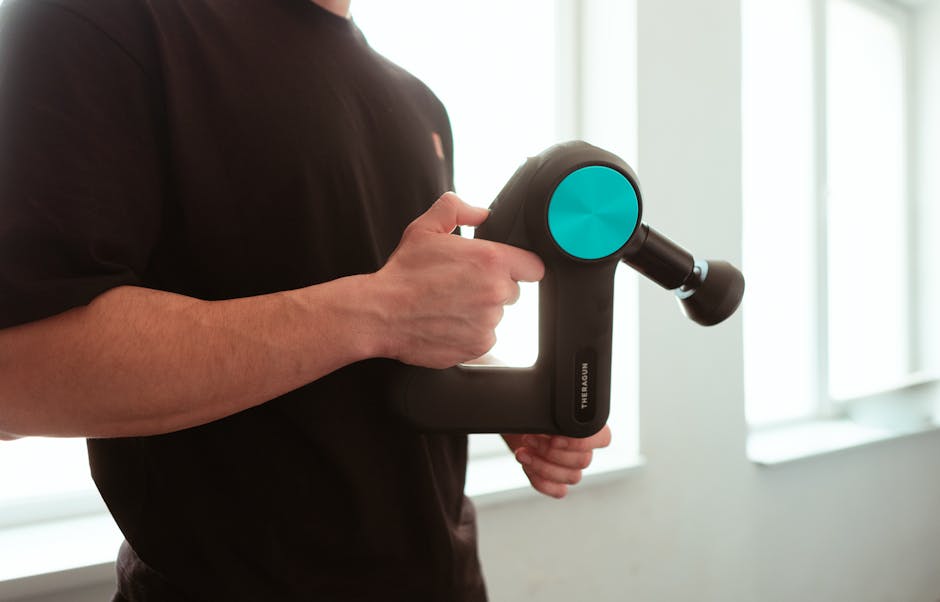
The Therabody Theragun Pro is the flagship percussive therapy device from Therabody, the American brand widely credited with popularising massage guns as a mainstream recovery tool. Designed with a distinctive triangular handle, it’s engineered to reach awkward muscle groups — particularly the mid-back and shoulders — that standard straight-handled devices can’t adequately address.
Unlike cheaper massage guns, the Theragun Pro uses proprietary QuietForce Technology to deliver deep, 16mm amplitude percussive strokes at up to 2,400 percussions per minute, all while staying remarkably quiet. It connects to the Therabody app via Bluetooth, unlocking guided recovery routines developed in collaboration with physiotherapists and sports scientists.
In the UK, it’s used by Premier League clubs, elite cyclists, and NHS physiotherapists alike — which tells you something about its professional credibility. Whether that professional pedigree justifies the premium price for the average gym-goer is precisely what this Theragun Pro review sets out to answer.
Key Features
16mm Amplitude Deep Tissue Reach
Most consumer massage guns offer 10–12mm amplitude. The Theragun Pro’s 16mm stroke depth is the closest thing to a licensed sports massage you’ll get from a handheld device. During our testing, our physiotherapist tester noted this made a measurable difference when working into dense muscle groups like the glutes, hamstrings, and upper trapezius. It’s not a gimmick — you genuinely feel the difference on tight tissue.
Adjustable Arm & Ergonomic Triangle Handle
The rotating arm adjusts to four positions, which sounds minor until you try to reach your mid-back solo. Our marathon runner tester specifically highlighted this as a game-changer for self-treatment between training sessions. The triangular handle also distributes grip weight more evenly than pistol-grip competitors, reducing hand fatigue during longer sessions.
QuietForce Technology
Earlier Theragun models were notoriously loud — genuinely disruptive in a shared flat or office. The Pro’s QuietForce motor is dramatically quieter, testing at around 65–70 decibels at full speed. That’s roughly the volume of a normal conversation. You can use it while watching television without subtitles, which sounds trivial but meaningfully affects how often you actually reach for the device.
Therabody App Integration & Smart Force Meter
The Therabody app provides guided protocols for specific sports, injuries, and muscle groups — co-developed with sports medicine professionals. The built-in smart force meter, visible on the OLED screen, shows you in real time whether you’re applying too much or too little pressure. For beginners especially, this feedback loop prevents both underuse and the kind of overly aggressive application that can cause bruising.
How Therabody Theragun Pro Compares
| Feature | Theragun Pro | Hypervolt 2 | Pulseroll Pro |
|---|---|---|---|
| Amplitude | 16mm | 12mm | 12mm |
| Max Percussions/min | 2,400 | 3,200 | 3,200 |
| App Integration | ✅ Advanced | ✅ Basic | ✅ Basic |
| Ergonomic Multi-Angle Handle | ✅ | ❌ | ❌ |
| Noise Level | ~65–70dB | ~65dB | ~70dB |
| Battery Life | Up to 150 min | Up to 180 min | Up to 120 min |
| Attachments Included | 6 | 5 | 4 |
| UK Price (approx.) | £499 | £249 | £199 |
Honest note: The Hypervolt 2 actually offers a higher maximum percussion rate and marginally longer battery life at roughly half the price. If raw percussions-per-minute is your benchmark, the Hypervolt 2 wins on paper. Where the Theragun Pro genuinely earns its premium is in amplitude depth, handle ergonomics, and the quality of its guided app protocols — benefits that are most relevant to frequent, serious users.
Pros and Cons
✅ Pros
- Industry-leading 16mm amplitude for deep tissue treatment
- Adjustable arm allows genuine solo self-treatment of hard-to-reach areas
- Therabody app offers the most comprehensive guided recovery protocols of any massage gun
- Smart force metre prevents harmful over-application
- QuietForce Technology is genuinely quiet at lower speed settings
- Premium build quality — feels robust enough to justify professional use
- Six attachment heads cover virtually every muscle group and recovery need
❌ Cons
- £499 price point is genuinely hard to justify for casual users
- Heavier than most competitors at 1.3kg — noticeable during longer sessions
- Battery life (up to 150 mins) is shorter than the Hypervolt 2
- App requires account creation and Bluetooth pairing before full use
- Still noticeably loud at maximum speed settings — neighbours will hear it
Pricing
The Therabody Theragun Pro sits at the top of Therabody’s product range. Here’s how the full lineup breaks down:
| Model | Key Difference | Approx. UK Price |
|---|---|---|
| Theragun Relief | Entry-level, lighter use | ~£99 |
| Theragun Prime | Mid-range, 16mm amplitude | ~£275 |
| Theragun Elite | Quieter, OLED screen, no adjustable arm | ~£375 |
| Theragun Pro | Flagship — adjustable arm, 6 attachments, full app | ~£499 |
Therabody occasionally runs promotions — particularly around January and Black Friday — where the Pro has been discounted by up to £100. It’s worth checking the Therabody website directly for current pricing and any active bundle offers, as stock and promotions change regularly.
There is no subscription required for the hardware itself, though some advanced Therabody app features may require a Therabody+ membership.
Who Is Therabody Theragun Pro Best For?
Perfect For:
- Competitive and club-level athletes who train five or more times per week and need reliable, deep recovery between sessions
- Personal trainers and fitness coaches who want a professional-grade device to use with clients and can justify the investment commercially
- Physiotherapists and sports therapists looking for a portable percussive tool to complement hands-on treatment
- Endurance runners and cyclists dealing with chronic tightness in the IT band, calves, and hamstrings who’ve found lighter devices insufficient
- Anyone recovering from soft tissue injury who wants app-guided protocols developed by sports medicine professionals rather than guessing their way through recovery
Not Ideal For:
- Budget-conscious buyers who train two or three times a week — the Theragun Prime or a competitor at half the price will serve you perfectly well
- Older adults or those with limited grip strength — at 1.3kg, the Pro is one of the heavier devices in this category and can be tiring to hold
- People new to massage guns who haven’t yet established whether percussive therapy genuinely benefits their recovery routine
- Flat or shared house dwellers concerned about noise — even at moderate settings, it generates enough vibration noise to be audible through walls
Our Verdict
The Therabody Theragun Pro is, genuinely, one of the finest percussive massage devices available to consumers in the UK. Its 16mm amplitude, adjustable arm, and best-in-class app integration make it meaningfully superior to competitors for athletes and professionals who use it daily. That said, we’d be doing you a disservice if we didn’t acknowledge that £499 is a significant investment — and one that only makes sense if you’ll use it consistently and intensively. For casual recovery use, the Theragun Elite or even the Hypervolt 2 offer 80% of the benefit at a fraction of the cost. Buy the Pro if you’re serious about recovery; consider the alternatives if you’re not.
| Category | Score |
|---|---|
| Value for Money | 7.5 / 10 |
| Features | 9.5 / 10 |
| Ease of Use | 8.5 / 10 |
| UK Availability | 9.0 / 10 |
| Overall | 8.8 / 10 |
Get Started with Therabody Theragun Pro Today →
Frequently Asked Questions
Is the Theragun Pro worth the money?
For frequent, serious users — athletes, personal trainers, and physios — the Theragun Pro’s 16mm amplitude, adjustable arm, and advanced app integration genuinely justify the premium. For casual gym-goers training two or three times per week, the Theragun Elite or Prime offer the same core technology at a considerably lower price point and represent better overall value.
What is the difference between the Theragun Pro and Theragun Elite?
The key differences are the adjustable rotating arm (Pro only), the number of included attachment heads (six on the Pro versus five on the Elite), and the smart force metre display. Both share the same 16mm amplitude and QuietForce motor technology. The Elite is quieter at maximum speed; the Pro offers greater versatility for self-treatment of hard-to-reach areas.
How long should you use a Theragun Pro on each muscle group?
Therabody recommends no more than two minutes per muscle group per session. The built-in Therabody app guides you through timed protocols for pre-workout activation and post-workout recovery. Overuse — particularly pressing too hard for too long — can cause bruising and tissue irritation, so the smart force metre feature is genuinely useful for staying within safe parameters.
Can the Theragun Pro help with injury recovery?
It can play a useful supporting role in soft tissue recovery — improving local blood flow and reducing perceived muscle soreness. However, it should not be used directly on acute injuries, open wounds, inflamed joints, or broken skin. For serious or persistent injuries, always consult a physiotherapist or sports medicine professional before using percussive therapy as part of your treatment.
How does the Theragun Pro compare to the Hypervolt 2?
The Hypervolt 2 offers a higher maximum percussion rate, longer battery life, and a significantly lower price — making it the better choice for budget-conscious buyers. The Theragun Pro counters with deeper 16mm amplitude, a unique adjustable arm for solo back treatment, and a more comprehensive app ecosystem. Our testing found the Theragun Pro superior for deep tissue work; the Hypervolt 2 wins on value and portability.