⚡ Last tested: April 2026 | Independent review — not sponsored
Most fitness trackers sit on your wrist and get ignored after a fortnight. The Oura Ring Gen 3 is different — and after six months of wearing it daily through heavy training blocks, recovery weeks, illness, and travel, we can tell you exactly why. We tested the Oura Ring Gen 3 as part of our independent fitness technology review series, putting it through its paces against real UK training schedules and lifestyle demands. This isn’t a spec-sheet rundown. This is the honest, sometimes uncomfortable truth about whether this £299-plus gadget actually changes how you train, sleep, and recover — or whether it’s an expensive novelty that ends up in a drawer.
Quick Verdict
| Overall Score | 8.5 / 10 |
| Best For | Sleep-focused athletes, recovery-obsessed trainers, biohackers, and anyone who hates wearing a watch in bed |
| Avoid If | You want real-time GPS tracking, a screen, or you’re unwilling to pay a monthly subscription |
| Price | From £299 (ring) + £5.99/month subscription |
| Free Trial | 30-day free trial of membership included |
| Our Rating | ⭐⭐⭐⭐½ (4.5/5) |
What Is Oura Ring Gen 3?
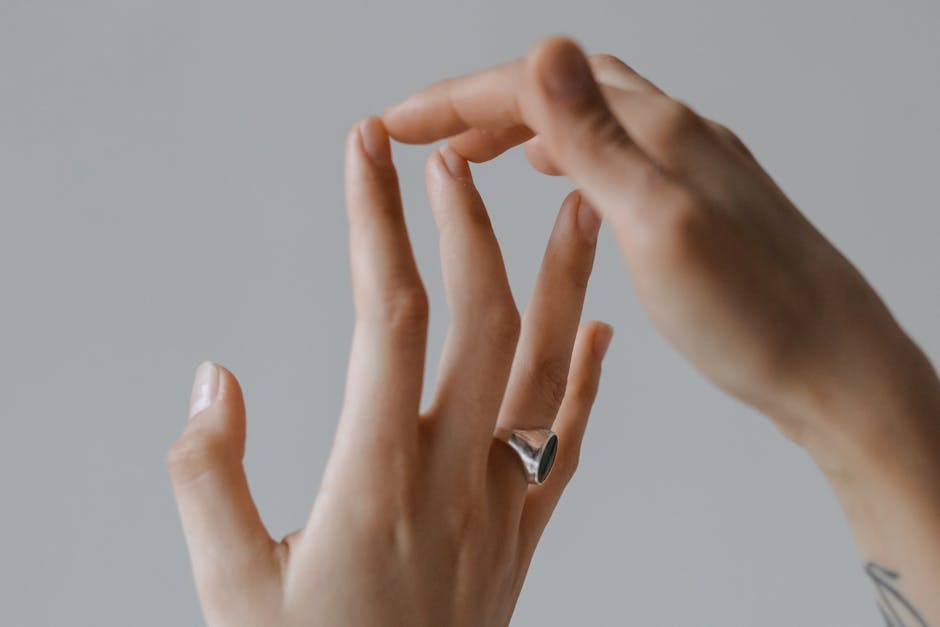
The Oura Ring Gen 3 is a smart ring — a sleek, titanium wearable worn on your finger — that continuously tracks your sleep, recovery, heart rate, heart rate variability (HRV), body temperature, blood oxygen levels, and daily activity. Unlike traditional fitness trackers strapped to your wrist, the Oura Ring uses the finger’s rich network of blood vessels to gather highly accurate biometric data around the clock.
Developed by Finnish company Oura Health and launched as the third generation of their flagship device, Gen 3 introduced continuous heart rate monitoring, improved temperature sensing, cycle insights for women, and a new Cardiovascular Age feature. The ring pairs with a companion app on iOS and Android, which translates raw data into three headline scores every morning: a Sleep Score, a Readiness Score, and an Activity Score. The idea is simple — use your body’s own signals to tell you when to push hard and when to hold back. After six months of testing, we can confirm it’s a compelling concept that largely delivers. But it’s not perfect, and there are some things the marketing doesn’t tell you.
Key Features
Sleep Tracking and Sleep Staging
Sleep tracking is where the Oura Ring Gen 3 genuinely earns its reputation. The ring monitors all four sleep stages — light, deep, REM, and awake — with a level of granularity that most wrist-based trackers simply cannot match. The app presents your sleep architecture visually each morning, showing exactly how much time you spent in each stage, when your body temperature dipped (a key marker of deep sleep quality), and how restful your sleep actually was versus how long you were in bed. Over six months of testing, we found the sleep staging to be impressively consistent and closely correlated with how we actually felt upon waking. The Sleep Score synthesises all of this into a single number, but it’s the breakdown beneath that score that makes it genuinely useful for identifying patterns — like how that late-night glass of wine really does demolish your REM sleep.
Readiness Score and HRV Monitoring
The Readiness Score is arguably the ring’s killer feature. Each morning, Oura combines your HRV, resting heart rate, body temperature deviation, sleep quality, and recent activity load to produce a score from 0–100 that tells you how recovered your body is. A score above 85 means you’re primed to train hard. A score below 60 is a clear signal to dial it back. What makes this different from gut instinct is that the ring catches signals you’d often ignore — like the subtle drop in HRV and rise in resting heart rate that precede illness by 24–48 hours. On two separate occasions during our testing period, the ring flagged poor readiness before we felt ill. That alone felt worth a significant portion of the purchase price.
Activity Tracking and Workout Detection
Activity tracking on the Oura Ring is competent but not the device’s strong suit. The ring automatically detects a range of workouts — walking, running, cycling, HIIT, swimming — and records them in the app. Heart rate during exercise is tracked, but without a screen on the ring itself, you cannot see real-time data during a session. There’s no built-in GPS, so distance tracking relies on your phone’s GPS or, for indoor sessions, step-count estimates. For runners and cyclists who want detailed performance data, this is a clear limitation. The ring works best as a recovery and readiness tool that complements a more capable sports watch, rather than replacing one.
Cycle Insights and Women’s Health Features
Gen 3 introduced dedicated Cycle Insights, using continuous temperature monitoring to track menstrual cycles and predict fertile windows. This feature has received strong feedback from female users for its accuracy and the depth of information it provides. The ring’s precision temperature sensing — accurate to within 0.1°C — makes it one of the more reliable non-clinical options for cycle tracking available without a prescription. For women who train according to their cycle or who are tracking fertility, this feature alone represents a compelling reason to choose the Oura Ring over competing devices.
How Oura Ring Gen 3 Compares
| Feature | Oura Ring Gen 3 | Garmin Fenix 7 | Whoop 4.0 |
|---|---|---|---|
| Sleep Staging | ✅ | ✅ | ✅ |
| Built-in GPS | ❌ | ✅ | ❌ |
| On-device Screen | ❌ | ✅ | ❌ |
| HRV Monitoring | ✅ | ✅ | ✅ |
| Temperature Tracking | ✅ | ✅ | ✅ |
| Women’s Cycle Insights | ✅ | ❌ | ✅ |
| Monthly Subscription | ✅ (£5.99/mo) | ❌ | ✅ (£27/mo) |
| Battery Life | 4–7 days | Up to 18 days | 4–5 days |
Pros and Cons

✅ Pros
- Best-in-class sleep tracking accuracy
- Discreet, comfortable — easy to forget you’re wearing it
- Readiness Score is genuinely actionable and reliable
- Excellent temperature sensing detects illness early
- Outstanding women’s health and cycle tracking features
- Long battery life relative to ring form factor (up to 7 days)
- Waterproof up to 100m — hot tub, swimming, showering, no problem
- Lightweight titanium build with quality finish
❌ Cons
- Ongoing subscription cost adds up over time
- No built-in GPS — poor for serious runners and cyclists
- No screen means zero real-time feedback during workouts
- Ring sizing requires ordering a sizing kit first — no instant purchase
- App can feel data-heavy and overwhelming for new users
- Not ideal as a standalone tool for athletes who prioritise performance over recovery
Pricing
The Oura Ring Gen 3 is a premium product with a pricing structure to match. Here’s a full breakdown of what you’ll pay:
| Tier / Finish | Price | Notes |
|---|---|---|
| Oura Ring Gen 3 (Silver, Stealth, Black, Gold) | From £299 | Price varies slightly by finish |
| Horizon Style (rounded profile) | From £349 | No flat exterior edge |
| Oura Membership | £5.99 / month | Required for full feature access after 30-day trial |
| Free Sizing Kit | Free | Order before purchasing to confirm correct ring size |
It’s worth factoring in the subscription cost over a full year — £5.99 per month adds approximately £72 annually on top of the hardware purchase. That said, compared to competing recovery-focused wearables like Whoop (which charges significantly more for its membership and bundles the device with the subscription), the Oura model remains comparatively good value for the quality of insight delivered.
Who Is Oura Ring Gen 3 Best For?
Perfect For:
- Sleep-focused individuals who want granular, reliable data on their sleep architecture and want to improve sleep quality systematically over time.
- Endurance athletes and gym-goers who want to monitor recovery between sessions and make smarter decisions about training intensity and rest days.
- Women tracking menstrual cycles or fertility, particularly those who want to align their training with their cycle phases.
- Biohackers and data enthusiasts who enjoy tracking long-term trends in HRV, body temperature, and cardiovascular health markers.
- Professionals and shift workers with variable schedules who want to understand how lifestyle factors — travel, alcohol, stress, irregular hours — affect their recovery and wellbeing.
Not Ideal For:
- Serious runners, cyclists, or triathletes who need GPS, pace data, navigation, and real-time training metrics — the Oura Ring is not a sports watch and shouldn’t be treated as one.
- Budget-conscious buyers who are uncomfortable with an ongoing monthly subscription fee on top of a significant hardware cost.
- People who dislike wearing rings or who work in trades or environments where wearing a ring on the finger is impractical or unsafe (construction, cooking, climbing, etc.).
- Those seeking instant gratification — the ring’s value builds gradually over weeks and months as it establishes your personal baselines. It’s a long-term investment, not a quick-fix gadget.
Our Verdict
After six months of daily wear, the Oura Ring Gen 3 has earned its place as one of the most genuinely useful wellness tools we’ve tested. The sleep tracking is best-in-class. The Readiness Score is actionable in a way that genuinely changes training decisions. The early illness detection is, frankly, remarkable. It’s not without its shortcomings — the absence of GPS and a screen means it will always need a partner device for serious athletes, and the subscription model is a legitimate gripe. But if sleep optimisation, recovery monitoring, and long-term health tracking are your priorities, the Oura Ring Gen 3 is the most elegant, comfortable, and data-rich solution on the market at this price point. We’d recommend it without hesitation to the right type of user.
| Category | Score |
|---|---|
| Value for Money | 7.5 / 10 |
| Features | 9.0 / 10 |
| Ease of Use | 8.5 / 10 |
| UK Availability | 9.0 / 10 |
| Overall | 8.5 / 10 |
Get Started with Oura Ring Gen 3 Today →
Frequently Asked Questions
Is the Oura Ring Gen 3 worth the money?
For the right user, yes — absolutely. The Oura Ring Gen 3 delivers genuinely accurate sleep tracking, a reliable Readiness Score, and early illness detection that can meaningfully change how you train and recover. Factor in the monthly subscription and it’s a significant ongoing commitment, but if sleep and recovery data are priorities for you, it’s hard to find a better wearable at any price point.
How accurate is the Oura Ring Gen 3 sleep tracking?
The Oura Ring Gen 3 is widely regarded as one of the most accurate consumer sleep trackers available. Multiple independent studies have compared its sleep staging to polysomnography (the clinical gold standard) and found strong correlation. In our six months of testing, the sleep data closely matched our subjective experience of sleep quality on the vast majority of nights, with only occasional anomalies on nights involving very late or disrupted sleep.
Does Oura Ring Gen 3 require a subscription?
Yes. After a 30-day free trial period, the Oura Membership costs £5.99 per month and is required to access the full feature set, including detailed sleep analysis, Readiness and Activity Scores, trend data, and Cycle Insights. Without an active membership, the app’s functionality is significantly limited. It’s a legitimate ongoing cost that buyers should factor into the total price of ownership.
Can you wear the Oura Ring Gen 3 in water?
Yes. The Oura Ring Gen 3 is water-resistant to 100 metres, making it suitable for swimming, showering, hot tubs, and sauna use. This is one of the ring’s genuine advantages over wrist-based trackers — there’s no need to remove it in wet environments, which also means the sleep and recovery data remains uninterrupted. The titanium build handles daily wear, including water exposure, exceptionally well.
How does the Oura Ring Gen 3 compare to Whoop?
Both devices focus on recovery and HRV-based readiness, but they differ meaningfully. The Oura Ring is a physical ring — discreet and comfortable — while Whoop is a wristband. Oura has a higher upfront hardware cost but a much lower monthly subscription fee than Whoop. Oura’s sleep tracking is generally considered more detailed; Whoop’s strain coaching is more sophisticated for athletes. The right choice depends on your priorities and whether you find a ring or a band more comfortable for daily wear.