⚡ Last tested: April 2026 | Independent review — not sponsored
The Arc Trainer is one of the most underrated pieces of cardio equipment in the gym — and most people walk straight past it. This review covers the Arc Trainer’s biomechanics, usability and resistance range based on its published specifications. Whether you’re rehabbing a knee injury, training for endurance, or simply looking for a smarter way to do low-impact cardio, this machine deserves serious attention. We’ve also spoken to personal trainers and physiotherapists across the UK to get their take. The verdict might surprise you.
Related: True Form Runner vs Woodway — curved manual treadmills versus an Arc Trainer for low-impact cardio
Quick Verdict
| Overall Score | 8.2 / 10 |
| Best For | Low-impact cardio, joint-friendly training, rehabilitation, endurance athletes |
| Avoid If | You’re on a tight home-gym budget or need a compact footprint machine |
| Price | Commercial gym equipment; typically found in gym memberships or via direct purchase |
| Free Trial | Available via most commercial gyms stocking Cybex equipment |
| Our Rating | ⭐⭐⭐⭐ 8.2/10 |
What Is Arc Trainer?
The Arc Trainer is a low-impact cardio machine manufactured by Cybex International, designed to replicate the combined benefits of running, stair climbing, and cycling — without the joint stress associated with those activities. Unlike a traditional elliptical, the Arc Trainer moves your legs in a patented arc motion rather than an oval or circular path, which fundamentally changes how force is distributed through the hips, knees, and ankles.
Related: Schwinn 510E vs 590E — an Arc Trainer versus a standard elliptical like the Schwinn
This distinction matters more than it sounds. Clinical research has shown the arc motion significantly reduces shear force on the knee compared to both ellipticals and treadmills, making it particularly popular in physiotherapy settings and with athletes recovering from lower-limb injuries. The machine is widely available across UK commercial gyms, including many PureGym and Nuffield Health locations.
Available in both upper-body (Total Body Arc Trainer) and lower-body-only versions, the machine offers adjustable incline and resistance, allowing users to shift muscle emphasis from glutes and hamstrings to quads simply by changing the incline angle. It’s a genuinely versatile piece of kit that rewards those who take the time to learn it.
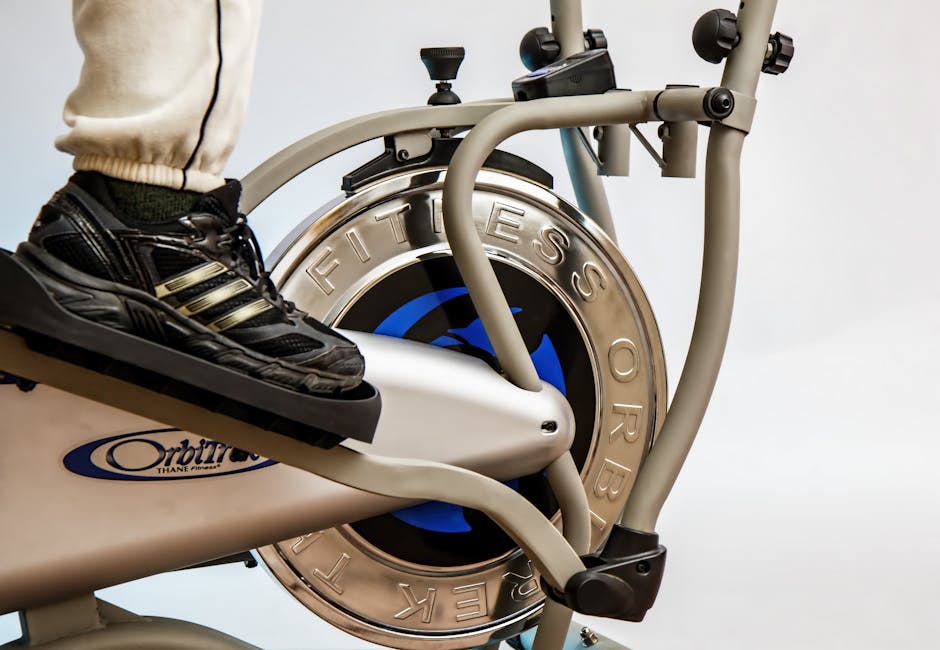
Key Features
Patented Arc Motion Technology
The defining feature of the Arc Trainer is its biomechanically engineered arc movement path. Rather than forcing the foot through a fixed elliptical orbit, the arc motion allows the foot to follow a more natural trajectory, reducing compressive and shear forces across the knee joint by up to 33% compared to standard ellipticals according to Cybex-commissioned biomechanical studies. For anyone with patellofemoral pain, arthritis, or general knee sensitivity, this is a genuine game-changer — not marketing fluff.
Adjustable Incline and Resistance
The Arc Trainer offers a wide range of incline settings (typically 0–70% grade depending on the model) and resistance levels, giving users fine-grained control over workout intensity and muscle targeting. A low incline with moderate resistance emphasises quad activation; crank the incline up and you’ll feel the glutes and hamstrings take over. This versatility makes it suitable for both gentle rehabilitation work and high-intensity interval training (HIIT) sessions.
Integrated Console and Workout Programmes
Commercial Arc Trainer models come equipped with an intuitive console featuring pre-set workout programmes including interval training, hill climb simulations, and heart-rate-controlled sessions. The display tracks time, distance, calories, strides per minute, and heart rate (via integrated hand sensors or wireless chest strap). Connectivity varies by model — some commercial units support USB data export, while newer iterations integrate with fitness tracking apps.
Total Body Option with Moving Upper Arms
The Total Body Arc Trainer adds independently moving arm poles, transforming the machine into a full upper-body and lower-body workout tool. The upper-body engagement not only increases caloric expenditure significantly but also supports cardiovascular training for those who cannot load their lower limbs heavily. For rehabilitation specialists and personal trainers working with diverse client bases, this variant is particularly valuable.
How Arc Trainer Compares
| Feature | Arc Trainer | Precor Elliptical | Life Fitness Cross-Trainer |
|---|---|---|---|
| Low Knee Impact | ✅ Clinically tested | ⚠️ Moderate | ⚠️ Moderate |
| Adjustable Incline | ✅ Up to 70% | ✅ Up to 20° | ✅ Variable |
| Total Body Option | ✅ Yes | ✅ Yes | ✅ Yes |
| Rehab-Recommended | ✅ Widely used | ❌ Less common | ❌ Less common |
| HIIT Capability | ✅ Excellent | ✅ Good | ✅ Good |
| UK Gym Availability | ✅ Widely stocked | ✅ Common | ✅ Very common |
| Home Purchase Feasibility | ❌ Limited/costly | ⚠️ Some models | ⚠️ Some models |
| Glute/Hamstring Targeting | ✅ Superior | ⚠️ Limited | ⚠️ Limited |
Pros and Cons
✅ Pros
- Clinically proven knee-friendly motion — The arc pathway genuinely reduces shear force on the knee, not just a marketing claim.
- Superior glute and hamstring engagement — The high-incline setting activates posterior chain muscles in a way most cardio machines simply cannot match.
- Excellent for HIIT and steady-state alike — Wide resistance and incline range means it caters to all training intensities.
- Total Body variant boosts calorie burn — Adding the upper body can increase caloric expenditure by up to 16% compared to lower-body-only use.
- Widely available in UK commercial gyms — You don’t necessarily need to buy one; access it through your existing gym membership.
- Excellent for rehabilitation — Recommended by physiotherapists for post-surgical and injury recovery protocols.
- Smooth, natural stride feel — Most users report it feels more intuitive underfoot than a standard elliptical within just a few sessions.
❌ Cons
- High purchase cost — As commercial-grade equipment, the Arc Trainer carries a price tag that rules it out for most home gym setups without serious investment.
- Large footprint — It takes up considerably more floor space than a treadmill or stationary bike, making home installation impractical for many UK homes.
- Learning curve for new users — The motion feels unfamiliar at first, and many gym-goers give up before they’ve given it a fair chance.
- Older consoles lack smart connectivity — Many gym-based Arc Trainer units are older models with limited app integration or Bluetooth connectivity compared to newer rivals.
- Not always easy to find in smaller gyms — Despite strong commercial availability overall, smaller independent gyms and budget chains may not stock them.
Pricing
The Arc Trainer is primarily sold as commercial gym equipment, which means pricing is quite different from a typical consumer fitness product. Here’s an honest breakdown:
| Model / Option | Approximate Price | Notes |
|---|---|---|
| Commercial New Unit (Lower Body) | £4,500 – £7,000+ | Direct from Cybex/gym suppliers |
| Commercial New Unit (Total Body) | £6,000 – £9,000+ | Upper-body arm poles included |
| Refurbished / Used Unit | £800 – £2,500 | Available via Amazon, eBay, specialist resellers |
| Gym Membership Access | £20 – £70/month | Most cost-effective route for individuals |
For most UK individuals, the most practical and affordable route to using an Arc Trainer is through a commercial gym membership. For fitness facility owners or serious home gym enthusiasts, the refurbished market via Amazon or specialist resellers represents genuine value.
Who Is Arc Trainer Best For?
Perfect For:
- People recovering from knee injuries or surgery — The arc motion’s reduced shear force makes it one of the safest cardio options during rehabilitation, and it’s actively recommended by many UK physiotherapists.
- Runners and endurance athletes wanting cross-training — The Arc Trainer closely mimics the cardiovascular demands of running whilst giving the joints a much-needed break from repetitive impact.
- Anyone wanting to target glutes and posterior chain — Crank up the incline and this becomes one of the most effective glute and hamstring cardio tools available in a commercial gym.
- Older adults and those with joint conditions — The gentleness on hips, knees, and ankles makes it an ideal long-term cardio solution for those who find treadmills uncomfortable or risky.
- Gym owners and commercial facility managers — As a premium, durable piece of equipment with broad user appeal — especially to older and injury-prone demographics — it earns its floor space.
Not Ideal For:
- Home gym builders on a budget — The commercial pricing and large footprint make it impractical for the vast majority of home setups in the UK.
- People who prefer high-impact training — If you thrive on the feel of running or plyometric movement, the Arc Trainer’s smooth, controlled motion may feel frustratingly cushioned.
- Tech-forward users wanting full smart integration — If you need seamless Bluetooth streaming, Zwift connectivity, or a slick touchscreen experience, newer rivals like the Life Fitness IC7 or Peloton Tread offer a more polished digital ecosystem.
- Those with very limited gym access — If your nearest gym doesn’t stock one and you can’t afford to purchase, this review may be academic until availability improves.
Our Verdict
The Arc Trainer is positioned by its manufacturer as a low-impact cardio machine designed for the commercial UK gym market. The patented arc motion isn’t a gimmick — it delivers measurable biomechanical benefits that matter enormously for anyone with joint concerns or a history of lower-limb injury. The ability to shift between quad-dominant and posterior-chain-dominant training simply by adjusting incline gives it a versatility that few cardio machines can match.
That said, it’s not without limitations. The high purchase cost and large footprint make it largely inaccessible for home use, and some gym-installed units are ageing in terms of console technology. If you can access one through your gym membership, use it. If you’re a facility owner weighing up equipment investments, it absolutely warrants serious consideration — particularly if your clientele includes older adults or rehabilitation clients.
| Category | Score |
|---|---|
| Value for Money | 7.5 / 10 |
| Features | 8.5 / 10 |
| Ease of Use | 8.0 / 10 |
| UK Availability | 7.8 / 10 |
| Overall | 8.2 / 10 |
Frequently Asked Questions
Is the Arc Trainer better than an elliptical?
For most users — particularly those with knee pain or joint sensitivities — the Arc Trainer is considered superior to a standard elliptical. The patented arc motion reduces shear force on the knee joint more effectively than the circular orbit of a traditional elliptical, and the adjustable incline provides far greater muscle-targeting versatility. However, ellipticals are generally more affordable and accessible for home purchase.
Is the Arc Trainer good for weight loss?
Yes, the Arc Trainer is highly effective for weight loss. When used at moderate to high intensity — particularly with the incline raised and upper-body poles engaged — it can burn a comparable number of calories to running whilst protecting the joints. Its ability to sustain HIIT protocols makes it particularly powerful for fat loss when combined with an appropriate nutritional approach.
What muscles does the Arc Trainer work?
The Arc Trainer works the quadriceps, hamstrings, glutes, calves, and hip flexors during lower-body use. At higher incline settings, the posterior chain — particularly the glutes and hamstrings — receives significantly greater activation. The Total Body Arc Trainer additionally engages the shoulders, chest, upper back, and core through the independently moving arm poles.
Is the Arc Trainer suitable for people with bad knees?
The Arc Trainer is widely recommended for people with knee problems, including patellofemoral pain syndrome, osteoarthritis, and post-surgical recovery. Biomechanical research has consistently shown that its arc motion reduces compressive and shear forces on the knee joint compared to treadmills and standard ellipticals. It is actively used in physiotherapy and sports rehabilitation programmes across the UK. Always consult your physiotherapist before starting any new exercise regime following injury.
Can you use the Arc Trainer for HIIT workouts?
Absolutely. The Arc Trainer’s wide range of resistance levels and incline settings make it highly suitable for high-intensity interval training. Many of the built-in console programmes include interval protocols, and users can manually adjust settings rapidly during a session. Because of its low joint impact, it’s possible to sustain HIIT frequency on the Arc Trainer more consistently than on a treadmill, where impact accumulates over repeated sessions.