Ad disclosure: If you buy through our Awin links, we may earn a commission at no extra cost to you.
Magnesium Citrate vs Triple Complex vs Standard Tablets: The Short Answer
The headline milligram figures on these three products aren’t directly comparable, and getting that wrong changes the answer. The 700mg figure refers to the weight of the magnesium citrate compound. The product label states that each tablet provides 200mg of elemental magnesium. Once you correct every product to elemental magnesium and work out cost per 100mg, the standard Magnesium Tablets are actually the cheapest – but they’re currently out of stock. Between the two you can currently buy, Triple Complex is very slightly cheaper per 100mg of elemental magnesium than Citrate. All three contain magnesium oxide: it appears within the buffered ingredients of the Citrate and Triple Complex products, while the Standard Tablets use magnesium oxide as their stated magnesium source.
Quick Decision
Choose Citrate if…
You want a predictable once-a-day dose and don’t mind it being marginally the most expensive per 100mg of elemental magnesium.
Choose Triple Complex if…
You want the lowest cost per 100mg elemental magnesium of the two currently in stock, and don’t mind a variable 1–2 capsule daily cost.
Consider Standard Tablets when back in stock if…
Cost is the deciding factor – they work out cheapest per 100mg elemental, but are currently unavailable.
Verified Comparison – Corrected for Elemental Magnesium
| Spec | Magnesium Citrate | Magnesium Triple Complex | Magnesium Tablets 200mg |
|---|---|---|---|
| Price (checked 30 July 2026) | £13.99 | £12.99 | £19.29 |
| Stock status | In stock | In stock | Out of stock |
| Ingredients (magnesium sources) | Buffered magnesium citrate (magnesium citrate, magnesium oxide) | Buffered bisglycinate, citrate and malate (each buffered with magnesium oxide) | Magnesium oxide |
| Compound weight per tablet/serving | 700mg (1 tablet) | 1,800mg (2 capsules) | 334mg (2 tablets, ~167mg each) |
| Elemental magnesium per tablet/capsule | 200mg | 192mg (384mg per 2-capsule serving) | 100mg |
| Labelled daily dose | 1 tablet | 1–2 capsules | 2 tablets |
| Elemental magnesium per day at labelled dose | 200mg | 192mg–384mg | 200mg |
| Cost per day at labelled dose | 11.7p | 10.8p–21.7p | 10.7p |
| Cost per 100mg elemental magnesium | 5.83p | 5.64p | 5.36p |
Working: Citrate – £13.99 ÷ 120 tablets = 11.66p/tablet; 1 tablet supplies 200mg elemental magnesium; 11.66p ÷ 200mg × 100mg = 5.83p per 100mg. Triple Complex – £12.99 ÷ 120 capsules = 10.83p/capsule; each capsule supplies 192mg elemental magnesium (384mg ÷ 2); 10.83p ÷ 192mg × 100mg = 5.64p per 100mg. Standard Tablets – £19.29 ÷ 360 tablets = 5.36p/tablet; each tablet supplies 100mg elemental magnesium, so cost per 100mg elemental is the same as cost per tablet. All three figures are cost per 100mg of elemental magnesium, not per 100mg of compound weight, so they’re genuinely comparable with each other – unlike the raw headline figures on the packaging.
What the Ingredients Actually Show
None of these three is a single, unblended form of magnesium. Simply Supplements’ own ingredients panel for the Citrate product lists it as “Buffered Magnesium Citrate (Magnesium Citrate, Magnesium Oxide)”. The Triple Complex panel shows the same pattern across all three of its forms: “Buffered Magnesium Bisglycinate (Magnesium Bisglycinate, Magnesium Oxide), Buffered Magnesium Citrate (Magnesium Citrate, Magnesium Oxide), Buffered Magnesium Malate (Magnesium Malate, Magnesium Oxide)” – so this isn’t three chemically pure forms in one capsule. All three contain magnesium oxide: it appears within the buffered ingredients of the Citrate and Triple Complex products, while the Standard Tablets use magnesium oxide as their stated magnesium source – the most straightforward of the three, with no other form blended in.
A 2021 systematic review of magnesium supplement bioavailability found that organic magnesium compounds (such as citrate, bisglycinate and malate) are generally better absorbed than inorganic forms like magnesium oxide. Absorption also depends on dose. That’s a real, citable pattern – but it doesn’t tell us the specific absorption rate of any of these three particular Simply Supplements products, since none of them has been independently tested for this article, and each blends its “organic” form with a meaningful proportion of oxide. We’re not going to convert a general research finding into a specific promise about how much of these particular tablets you’ll absorb.
Magnesium Citrate 700mg
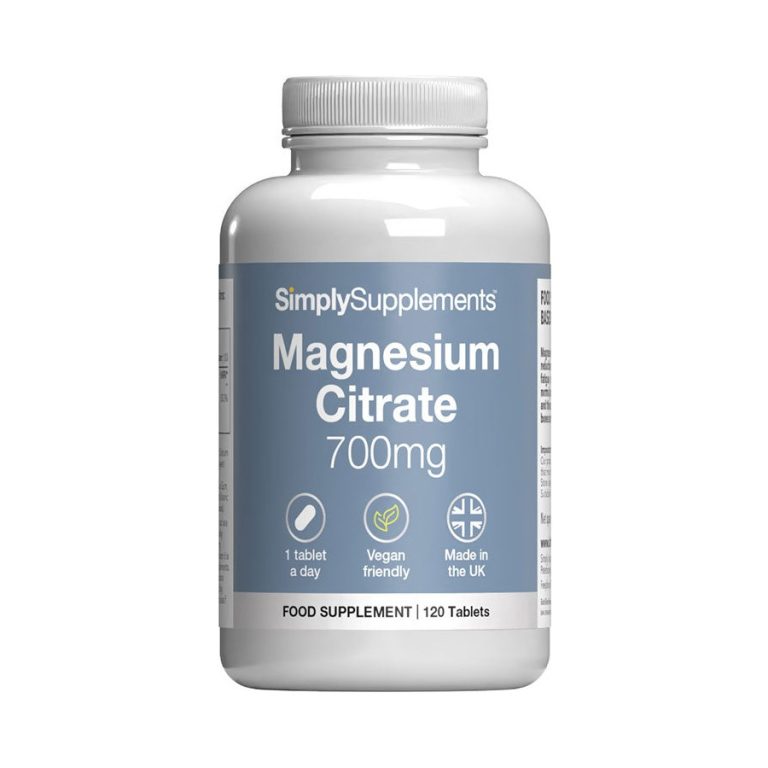
Each tablet supplies 200mg of elemental magnesium on a simple once-a-day labelled dose. The ingredients panel lists it as buffered magnesium citrate, made up of magnesium citrate and magnesium oxide, so it isn’t a single unblended form. Worked out per 100mg of elemental magnesium, it costs 5.83p – the highest of the two products currently in stock.
It suits buyers who want one tablet a day and a fixed, predictable dose rather than a range to think about. Its genuine limitation is cost: it’s marginally more expensive per 100mg of elemental magnesium than Triple Complex, even though its shelf price sits between the other two.
Magnesium Triple Complex
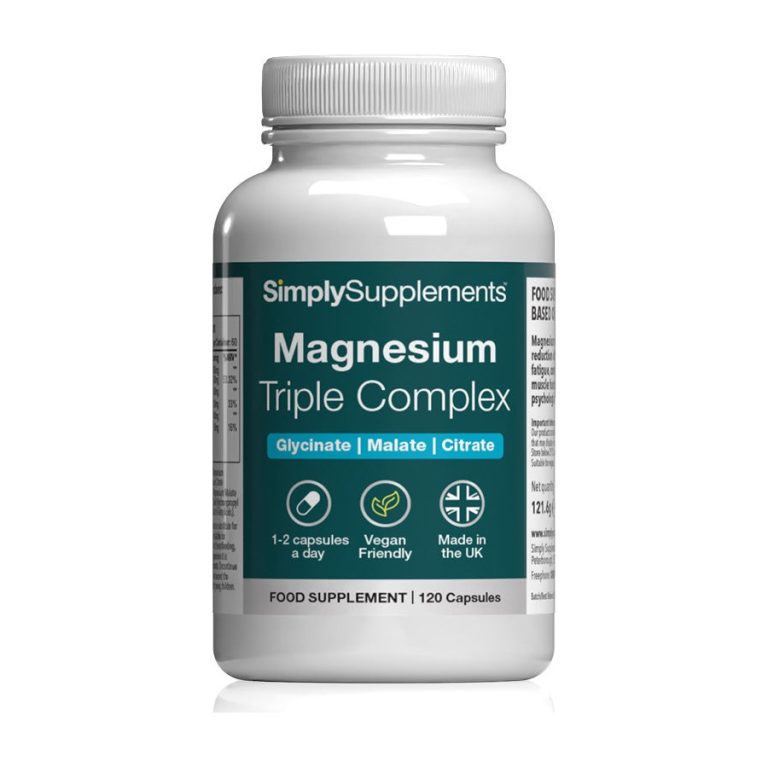
This one blends three buffered forms – magnesium bisglycinate, magnesium citrate and magnesium malate – each buffered with magnesium oxide. Each capsule supplies 192mg of elemental magnesium, and the label gives a 1–2 capsule daily range rather than a single fixed dose. Taking one capsule means 192mg of elemental magnesium that day; taking two means 384mg, so your actual daily intake – and cost – depends on how many you take. Worked out per 100mg of elemental magnesium, it costs 5.64p, the lowest of the two products currently in stock.
It suits buyers who want the best value of the two in-stock options and who don’t mind checking the pack’s dose table rather than assuming a fixed amount, and it carries the most detailed ingredients disclosure of the three products here. Its genuine limitation is that the 1–2 capsule range means your daily cost and elemental intake aren’t fixed – you need to decide, and check, how many capsules you’re actually taking.
Magnesium Tablets 200mg
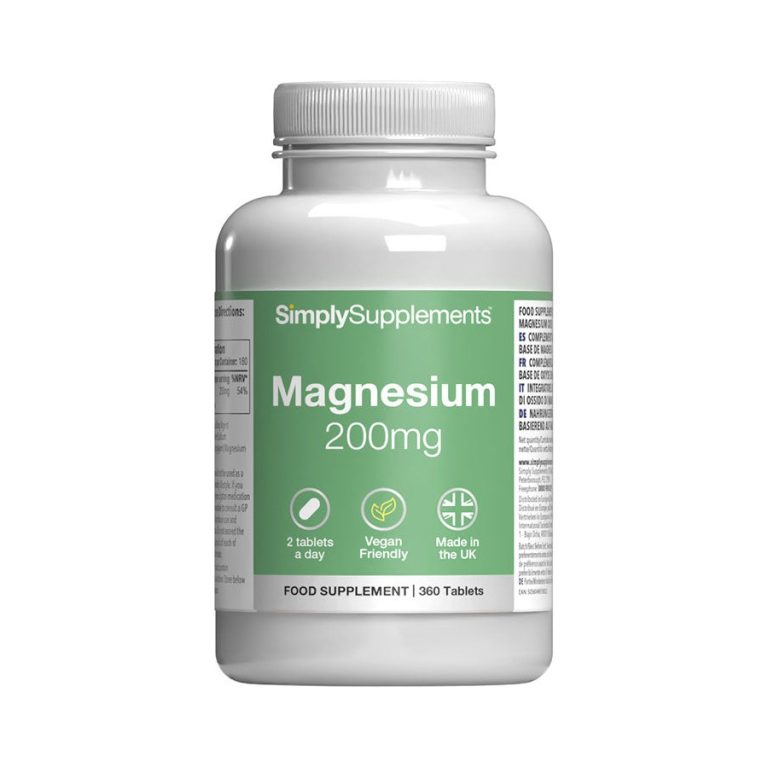
Out of stock
Magnesium oxide is the stated magnesium source here, with no other form blended in. Each tablet provides 100mg of elemental magnesium, and the labelled daily dose is two tablets. Worked out per 100mg of elemental magnesium, it costs 5.36p, the lowest calculated cost of all three products.
That makes it the cheapest option on a like-for-like basis, but it’s currently unavailable to buy, so this saving isn’t something you can actually act on right now. Worth checking back if cost is your main factor and the other two don’t suit.
NHS Guidance on Magnesium
The NHS states adults need around 300mg a day (men) or 270mg a day (women). Most people should get this from a varied, balanced diet – spinach, nuts and wholemeal bread are among the sources it names. Its specific supplement guidance is that having 400mg or less a day of magnesium from supplements is unlikely to cause harm, and that short-term doses above 400mg can cause diarrhoea. This is general population guidance about supplement intake – not a personal target to reach, and not a universal ceiling that applies identically to every individual regardless of diet, health conditions or medication.
Related: Vitamin D2 vs D3: Which Should UK Buyers Choose? — the same buyer’s-guide treatment for vitamin D
All three products here supply elemental magnesium within that general guidance at their labelled dose. If you’re already eating a magnesium-rich diet, adding one of these on top means you’re supplementing something your diet may already cover. The NHS’s framing is about topping up a shortfall, not adding to an already-adequate intake by default.
Drawbacks Worth Knowing About
- Citrate: the most expensive of the two in-stock options per 100mg of elemental magnesium, despite a mid-range shelf price.
- Triple Complex: the 1–2 capsule labelled range means your actual daily cost and elemental intake depend on how many you take; check the pack’s dose table rather than assuming.
- Standard Tablets: currently out of stock, so its favourable price-per-100mg-elemental figure isn’t usable right now.
Final Verdict
Correcting for elemental magnesium changes the answer from what the shelf prices alone suggest. Of the two products you can currently buy, Triple Complex is marginally better value per 100mg of elemental magnesium (5.64p vs 5.83p) and gives the most transparent ingredients disclosure of the three. If the Standard Tablets come back into stock, they become the cheapest option on a like-for-like basis at 5.36p per 100mg, worth checking back if cost is your main factor. None of the three is a single “pure” form: all contain magnesium oxide. Stay within the NHS’s general 400mg supplement guidance and remember it’s a population-level figure, not a personalised target.
A Note on Health Claims
Magnesium contributes to normal muscle function, electrolyte balance and the reduction of tiredness and fatigue as part of a balanced diet; these are established, EU/UK-recognised nutrition claims tied to adequate magnesium intake generally, not claims specific to any one of these three products or their particular formulation. We haven’t repeated marketing language about energy, recovery, or sleep benefits that goes beyond what the evidence above actually supports, and none of these products treats, prevent, or cure any medical condition.
Sources and Methodology
Prices, stock status and ingredients were read directly from Simply Supplements’ live product listings and nutritional information panels on 30 July 2026, including the store’s variant-level stock data (not page text alone) to confirm current availability.
- Pardo MR, Vilar EG, et al. (2021). Bioavailability of magnesium food supplements: A systematic review. Nutrition, 89:111294.
- NHS: Magnesium – daily requirements and supplement safety guidance.
For a related evidence-led comparison, see our creatine monohydrate comparison, and for general supplement value our MyProtein review.
Affiliate disclosure: Fitness Tools Reviewed is a member of the Awin affiliate network and may earn a commission if you buy through the links on this page, at no extra cost to you. This does not affect our editorial judgement; everything above is based on product labelling and ingredients, the retailer’s current listings, and peer-reviewed research, not physical testing.