Ad disclosure: If you buy through our Awin links, we may earn a commission at no extra cost to you.
Vitamin D2 vs D3: The Short Answer
For most UK adults without a specific dietary restriction, vitamin D3 is the generally preferred choice: a well-established systematic review and meta-analysis of randomised controlled trials found D3 more effective than D2 at raising and maintaining blood 25-hydroxyvitamin D levels. That’s a finding about the two forms in general, not a claim that this specific product is medically superior for you individually — and D2 remains the right choice for anyone avoiding animal-derived ingredients, since D3 is typically sourced from lanolin (sheep’s wool grease) while D2 here is vegan.
Quick Decision
Choose D3 if…
You have no dietary reason to avoid animal-derived ingredients.
Choose D2 if…
You’re vegan, or specifically want to avoid lanolin-derived ingredients.
Neither, without advice, if…
You have a diagnosed deficiency or a condition affecting calcium/vitamin D metabolism — see a GP or pharmacist first.
Vitamin D2 vs D3: Verified Comparison
| Spec | Vitamin D3 2,000iu | Vitamin D2 2,000iu |
|---|---|---|
| Price (checked 30 July 2026) | £6.69 | £10.64 (sale; regular price £21.29) |
| Stock status | In stock | In stock |
| Pack size | 180 tablets | 360 tablets |
| Labelled dose | “Take one tablet daily” | “For adults, take one to two tablets daily” |
| Cost per tablet at current price | 3.7p | 3.0p (5.9p at the regular, non-sale price) |
| Dietary status | Suitable for vegetarians (not stated as vegan) | Suitable for vegans and vegetarians |
| Active ingredient | Cholecalciferol (vitamin D3) | Ergocalciferol (vitamin D2) |
Cost per tablet is price ÷ pack size (£6.69 ÷ 180 = 3.7p; £10.64 ÷ 360 = 3.0p). The D2 product is currently discounted from its regular £21.29 (which works out at 5.9p a tablet) — sale prices can end at any time, so we’ve shown both figures rather than only the one that happens to look best today.
Why D3 Is Usually Recommended Over D2
Vitamin D3 (cholecalciferol) and D2 (ergocalciferol) both raise blood vitamin D levels, but not equally. A 2012 systematic review and meta-analysis published in the American Journal of Clinical Nutrition pooled randomised controlled trials directly comparing the two forms and concluded that D3 is more efficacious at raising serum 25-hydroxyvitamin D — the marker used to measure vitamin D status in blood tests — regardless of dosing frequency. That’s the primary evidence behind most UK supplement advice defaulting to D3 unless there’s a specific reason to choose D2.
It’s worth being precise about what that evidence does and doesn’t show. A more recent systematic review and meta-analysis examining body mass index as a factor found the advantage of D3 over D2 was significant in people at a healthy weight, but not significantly different in people with overweight or obesity. In other words, D3’s advantage over D2 is a real, evidence-backed general finding — not a claim that D3 will outperform D2 for every individual regardless of circumstances.
The NHS itself doesn’t distinguish between D2 and D3 in its public dosage guidance — it refers to “vitamin D” throughout. The distinction between the two forms sits underneath the NHS’s headline advice as a supplement-formulation detail, not something the NHS states as a recommendation of one form over the other.
What the NHS Actually Says About Dosage
According to NHS guidance on vitamin D, adults and children over 1 need 10 micrograms (400iu) of vitamin D a day. Both products on this page supply considerably more than that per tablet — 2,000iu is five times the NHS’s baseline daily figure. That’s not unusual for a standalone vitamin D supplement, but it does mean neither product is designed to be combined with other vitamin D sources without thinking about your total daily intake.
The NHS says that 10 micrograms (400 IU) a day is enough for most people taking a vitamin D supplement. Both products compared here provide 50 micrograms (2,000 IU) per tablet, making them higher-strength options rather than direct matches for the NHS’s standard recommendation.
The same NHS guidance states that adults and children over 11 should not take more than 100 micrograms (4,000iu) of vitamin D a day from supplements, as this could be harmful. This is general population guidance about supplement intake, not a personal target to aim for or a universal ceiling that applies identically regardless of individual circumstances. At one tablet a day, the D3 product here provides 2,000 IU—below the NHS’s 4,000 IU adult maximum, but still five times the 400 IU amount it says is sufficient for most people. The D2 product’s labelled range of one to two tablets a day would put you at 2,000–4,000iu — the top end reaches the NHS’s stated figure, so if you’re taking other vitamin D-containing supplements or fortified foods alongside it, it’s worth doing the sums rather than assuming there’s headroom.
None of this is a personalised recommendation or a diagnosis — if you have a diagnosed deficiency or a condition affecting calcium or vitamin D metabolism, that’s a conversation for a GP or pharmacist, not a blog post.
Vitamin D2 vs D3: Side by Side
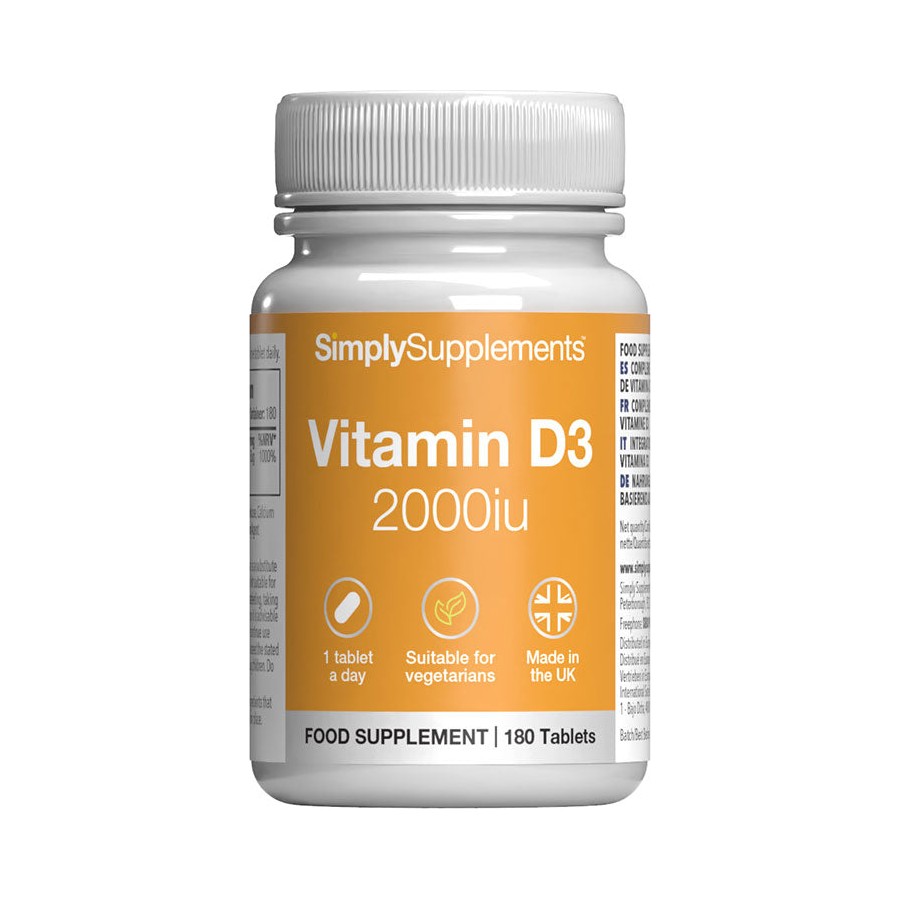
Vitamin D3 2,000iu
£6.69
Strengths:
- Lower cost per tablet (3.7p)
- Simple once-a-day dose
- The form generally found more effective at raising blood levels in the general population (see evidence above)
Limitations:
- Not vegan (vegetarian only)
Best for: anyone without a dietary reason to avoid animal-derived ingredients. Availability: in stock, checked 30 July 2026.
Check Vitamin D3 at Simply Supplements →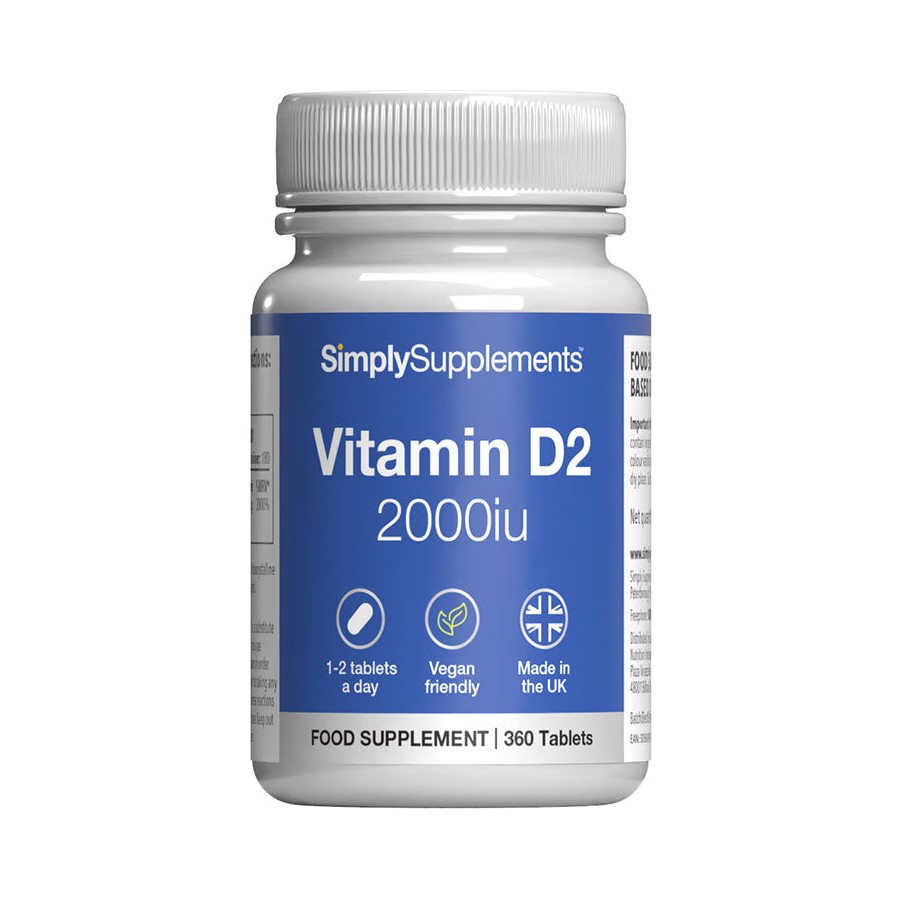
Vitamin D2 2,000iu (vegan)
£10.64 £21.29
Strengths:
- Vegan and vegetarian friendly
- Currently discounted to roughly the same cost-per-tablet as D3
Limitations:
- At its regular £21.29 price, costs nearly double D3 per tablet
- 1–2 tablet labelled dose range means intake varies by how many you take
Best for: vegans, or anyone avoiding lanolin-derived ingredients specifically. Availability: in stock, checked 30 July 2026 — current price is a sale price and may revert to £21.29.
Check Vitamin D2 at Simply Supplements →Drawbacks Worth Knowing About
- D3 2,000iu: not vegan (only vegetarian) — a dealbreaker for some buyers regardless of the evidence in its favour.
- D2 2,000iu: its current low price is a promotion, not the standard price — budget for the possibility it reverts to £21.29 (5.9p/tablet) — and the “1–2 tablets a day” labelled range means your actual intake depends on which end of that range you use.
Final Verdict
If you have no dietary reason to avoid D3, it remains the more evidence-backed choice for the general population, and at 3.7p a tablet it’s cheap either way. If you’re vegan, D2 is the sensible option — not because it’s a “better” supplement, but because it’s the one that fits a vegan diet, and right now it’s also competitively priced at its current sale price. Either way, keep your total intake from all sources in mind relative to the NHS’s 100 microgram (4,000iu) daily supplement figure, and if you have a diagnosed deficiency, that’s a conversation for a healthcare professional rather than a product comparison.
Sources and Methodology
Prices, stock status, dosage and dietary claims were read directly from Simply Supplements’ live product listings on 30 July 2026, cross-checked against the store’s variant-level stock data rather than page text alone. The D2/D3 efficacy claim and the body-weight nuance are drawn from peer-reviewed evidence, not merchant copy.
- Tripkovic L, et al. (2012). Comparison of vitamin D2 and vitamin D3 supplementation in raising serum 25-hydroxyvitamin D status: a systematic review and meta-analysis. American Journal of Clinical Nutrition.
- Comparison of the Effect of Daily Vitamin D2 and Vitamin D3 Supplementation on Serum 25-Hydroxyvitamin D Concentration and Importance of Body Mass Index: A Systematic Review and Meta-Analysis. Advances in Nutrition.
- NHS: Vitamin D — dosage and safety guidance.
If you’re comparing value across other daily supplements, our creatine monohydrate comparison, our magnesium forms guide and our MyProtein review use the same evidence-led approach.
Affiliate disclosure: Fitness Tools Reviewed is a member of the Awin affiliate network and may earn a commission if you buy through the links on this page, at no extra cost to you. This does not affect our editorial judgement — everything above is based on product labelling, the retailer’s current listings, and peer-reviewed research, not physical testing.