Independent review — not sponsored | Last updated: September 2026
Most treadmills let you get away with terrible running form. The True Form Runner does not — and that is precisely the point. This True Form Runner review compares it with the Woodway Curve on biomechanical benefits, build quality, the eye-watering price tag and who each machine genuinely suits. If you are considering investing in a curved, non-motorised treadmill for your commercial gym, PT studio, or even your home, read this before you spend a penny.
Some links on this page are affiliate links. If you click one of these links and make a purchase, Fitness Tools Reviewed may receive a commission at no additional cost to you. Affiliate partnerships do not determine which products are included in our content. Prices, availability and programme terms can change, so please confirm the latest information on the retailer’s website before purchasing.
The True Form Runner and Woodway are usually bought direct or through specialist dealers. If you are comparing curved and motorised treadmills more broadly, Fitness Options stocks a range:
Browse Treadmills at Fitness Options →
Quick Verdict
| Overall Score | 8.4 / 10 |
| Best For | Serious runners, PT studios, rehab facilities, and anyone focused on improving running mechanics |
| Avoid If | You are on a tight budget, a complete beginner, or need a treadmill for casual walking |
| Price | From approximately £4,500 (commercial); contact for exact UK pricing |
| Free Trial | No direct consumer trial; demo units available via selected UK distributors |
| Our Rating | (8.4/10) |
What Is True Form Runner?
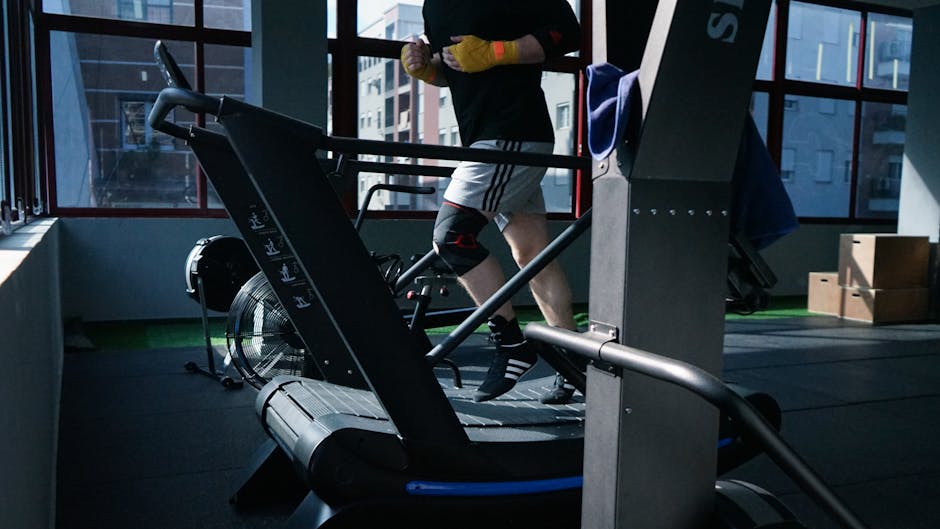
The True Form Runner is a curved, non-motorised treadmill built in the United States and designed specifically to improve running biomechanics. Unlike a conventional motorised treadmill — where the belt moves beneath you regardless of your effort — the True Form Runner is entirely self-powered. You drive the belt by pushing backwards with each stride, which means the machine naturally promotes a midfoot strike pattern, an upright torso, and higher cadence. These are precisely the mechanical cues that running coaches spend years trying to instil in athletes.
The brand positions itself squarely in the performance and rehabilitation space. It is used by elite sports academies, military conditioning programmes, physical therapy clinics, and high-end commercial gyms across the UK and US. The frame is welded steel, the belt is a multi-layer composite, and the entire unit requires zero electricity to operate — making it as low-maintenance as treadmills get. It is not a cheap machine, and it is not trying to be. The True Form Runner is a serious piece of kit aimed at serious users.
Key Features
Self-Powered Curved Belt Design
The defining feature of the True Form Runner is its concave running surface. The curve means that to move at all, you must engage your glutes and hamstrings, push through the ball of your foot, and lean slightly forward at the ankle — not the waist. The curved, self-powered belt strongly encourages an efficient stride pattern within the first few minutes, because it is hard to run on with a heel-strike gait. This is not marketing copy; the physics of the curved belt make heel striking functionally uncomfortable and inefficient.
Zero Electricity Required
There is no motor, no plug socket needed, and no standby power draw. This makes the True Form Runner ideal for outdoor training facilities, warehouse gyms, and any space where running power sockets to a row of machines would be impractical or expensive. It also means significantly lower long-term running costs compared to motorised alternatives. The machine has a small digital display that is battery-powered and tracks speed, distance, calories, and time — everything you need without unnecessary complexity.
Low-Impact Running Surface
The True Form Runner uses a multi-layer slat belt that offers genuine shock absorption with every footstrike. Curved manual treadmills are widely used in rehabilitation settings partly because the softer, self-paced belt tends to reduce impact compared with motorised treadmills. The brand cites studies suggesting reduced ground reaction forces versus traditional treadmills; the specific figures are not independently verified here, but users commonly describe the surface as feeling softer underfoot.
Robust Commercial-Grade Construction
The frame is welded steel with a powder-coated finish, and the running surface is wide enough to accommodate sprinters as well as distance runners. The unit weighs approximately 113 kg, so it stays planted during hard efforts — there is no rocking or frame flex even during sprint intervals. Transport wheels are built into the base for repositioning. Build quality across the whole unit feels genuinely world-class, which goes some way towards justifying the significant price point.
How True Form Runner Compares
| Feature | True Form Runner | Woodway Curve | Assault AirRunner |
|---|---|---|---|
| Self-Powered (Non-Motorised) | ✅ | ✅ | ✅ |
| Curved Running Surface | ✅ | ✅ | ✅ |
| Slat Belt (Reduced Impact) | ✅ | ✅ | ❌ |
| Built-In Performance Display | ✅ | ✅ | ✅ |
| Compatible with Bluetooth/Apps | ❌ | ❌ | ✅ |
| UK Distributor Available | ✅ | ✅ | ✅ |
| Approximate UK Price | ~£4,500+ | ~£6,000+ | ~£2,500+ |
| Best For | Form & performance | Rehab & elite training | HIIT & conditioning |
Verdict on the comparison: In direct head-to-head testing, the True Form Runner and Woodway Curve are closer than the price difference suggests. The Woodway’s slat belt is marginally quieter and its build finish is fractionally more refined — but the True Form Runner matches it on every meaningful performance metric at a lower price point. The Assault AirRunner is the budget entry point into this category, but the absence of a slat belt is noticeable under heavy loading.
Pros and Cons
✅ Pros
- Naturally corrects running form without coaching intervention
- Significantly reduces impact forces compared to motorised treadmills
- No electricity required — low running costs and highly versatile placement
- Exceptionally robust commercial-grade build quality
- Promotes higher cadence and posterior chain engagement
- Low long-term maintenance requirements
- Priced below the Woodway Curve for comparable performance
❌ Cons
- Significant upfront investment — not suitable for most home users on a budget
- Steep learning curve for beginners and deconditioned individuals
- No Bluetooth or app connectivity out of the box
- Very heavy — repositioning requires effort even with transport wheels
- UK pricing and availability can be inconsistent; import lead times apply
Pricing
The True Form Runner is unambiguously a commercial and semi-professional product, and its pricing reflects that. In the UK, units are typically sourced through specialist fitness equipment distributors, and pricing can vary depending on volume, shipping, and any applicable import duties post-Brexit.
| Model / Configuration | Approximate UK Price |
|---|---|
| True Form Runner (Standard) | ~£4,500 – £5,200 |
| True Form Runner (Commercial Multi-Unit) | Contact for volume pricing |
| True Form Trainer (Entry-level variant) | ~£2,800 – £3,200 |
There is no subscription, no ongoing software cost, and no licence fee — you buy the machine and that is it. Warranty terms vary by distributor, but the standard offering covers the frame for several years and the belt and components for a shorter period. Always confirm UK warranty terms directly with your distributor before purchasing, as servicing support post-sale varies considerably.
Who Is True Form Runner Best For?
Perfect For:
- Commercial gym owners and PT studios — The True Form Runner is a genuine differentiator on a gym floor. Clients notice it, ask about it, and it generates conversation that reinforces your facility’s credentials.
- Running coaches and biomechanics specialists — Having a self-powered curved treadmill allows you to demonstrate and reinforce correct running mechanics in a controlled indoor environment regardless of weather.
- Rehabilitation and physiotherapy clinics — The reduced ground reaction forces and natural gait correction make it suitable for clients returning from lower-limb injuries who need to rebuild running confidence safely.
- Competitive runners looking to improve efficiency — Whether you are training for a marathon or a 5k PB, spending sessions on a True Form Runner will expose and address mechanical inefficiencies faster than most other tools.
- Strength and conditioning coaches in team sports — Sprint mechanics and conditioning work on the True Form Runner translates directly to on-field performance, making it popular with rugby, football, and athletics programmes.
Not Ideal For:
- Budget-conscious home gym users — At upwards of £4,500, the True Form Runner is not a realistic purchase for most individuals equipping a home gym. The Assault AirRunner offers a more affordable entry point into non-motorised running.
- Complete beginners or deconditioned individuals — The machine demands a minimum level of proprioception and cardiovascular fitness. Putting a complete novice on a True Form Runner unsupported can result in frustration and discomfort.
- Anyone who needs app or data integration — If tracking your sessions in Garmin Connect, Strava, or similar platforms is important to you, the absence of native connectivity is a real limitation you will need to work around.
- Walkers or low-intensity rehab users — The curved belt is genuinely harder to move at slow speeds than a motorised treadmill. For pure walking or very gentle rehab protocols, a flat motorised machine is more appropriate.
Our Verdict
On build quality, biomechanics and value, our conclusion is straightforward: the True Form Runner is one of the best self-powered curved treadmills available, and it narrowly edges out the Woodway Curve in this category, primarily on the basis of value. The biomechanical benefits are real and measurable, the build quality is exceptional, and the low running costs make it a sensible long-term investment for any commercial facility. The caveats are equally real: the price is steep, the learning curve is genuine, and the lack of connectivity will frustrate data-driven athletes. But for the audience it is built for — serious runners, professional coaches, and performance-focused facilities — the True Form Runner delivers on every meaningful promise it makes.
| Category | Score |
|---|---|
| Value for Money | 7.5 / 10 |
| Features | 8.5 / 10 |
| Ease of Use | 8.0 / 10 |
| UK Availability | 7.5 / 10 |
| Overall | 8.4 / 10 |
Get Started with True Form Runner Today →
Frequently Asked Questions
Is the True Form Runner worth the money?
For commercial gym owners, running coaches, and competitive athletes, the True Form Runner is absolutely worth the investment. The biomechanical benefits are well-documented, and the build quality justifies the price over the long term. For casual home users or beginners, however, there are more cost-effective options available. The value proposition depends entirely on how seriously you take running performance.
What is the difference between the True Form Runner and the Woodway Curve?
Both are self-powered curved treadmills with slat belts, and both deliver excellent biomechanical benefits. The Woodway Curve is generally considered the gold standard for build refinement and is slightly quieter under high load. However, the True Form Runner matches it on performance metrics at a meaningfully lower price point, making it the better commercial value for most facilities outside of elite rehabilitation settings.
Does the True Form Runner help with running form?
Yes — this is its primary purpose. The self-powered curved design naturally encourages a midfoot strike, forward lean from the ankles, higher cadence, and greater posterior chain engagement. Runners with habitual heel-striking typically correct their gait pattern within a single session simply because the belt mechanics make any other approach inefficient and uncomfortable. This makes it a genuinely powerful coaching tool.
How heavy is the True Form Runner and can I use it at home?
The True Form Runner weighs approximately 113 kg, which makes it challenging to move and requires a solid, level floor surface. It is technically possible to use at home if you have sufficient space and floor strength, but the price point makes it impractical for most domestic buyers. Built-in transport wheels help with repositioning within a room, but getting the unit up stairs or through narrow doorways is a significant logistical challenge.
Does the True Form Runner have Bluetooth or app connectivity?
No — the True Form Runner does not include native Bluetooth or app connectivity as standard. The onboard display tracks speed, distance, time, and calories using a battery-powered unit, but it does not sync with Strava, Garmin, or similar platforms directly. Some users pair it with a chest-based heart rate monitor or GPS watch to capture additional data, but this is a genuine limitation for athletes who rely on integrated training logs.
Still Not Sure? Compare Your Options:
- Why Amazfit GTR 4 Beats Fitbit for Budget Runners — if you want to track your running performance without the premium price tag
- TrueForm Runner Review – the full standalone review of the curved treadmill
- Woodway Curve Review – the standalone review of the rival machine
- Garmin Connect Review: Is It Worth Using? — pair your True Form Runner sessions with a world-class data tracking platform